Tilak: Why Hindus Wear Different Marks on the Forehead
From sacred ash to sandalwood paste, the Hindu tilak is far more than a forehead decoration. Discover the meaning behind different tilaks worn across Hindu castes, sects, and cultures — decoded with humor, tradition, symbolism, and modern interpretation. Explore how this tiny forehead mark became a spiritual identity card, mindfulness tool, and cultural statement all at once.
DAILY RITUALSSCIENCE BEHIND TRADITIONS
Shalini Iyer
4/22/20262 min read
Tilak in Hindu culture is basically the original “status update.”
Before Instagram bios said “traveler • foodie • spiritually confused”, people looked at your forehead and instantly knew:
“Ah. Shaivite uncle.”
“Vaishnavite grandma.”
“Temple priest.”
“Newly married.”
“Person who definitely woke up before sunrise.”
The humble tilak wasn’t just decoration. It was identity, philosophy, energy science, skincare, and community membership — all packed into one forehead accessory. Different Hindu communities developed different styles over centuries.
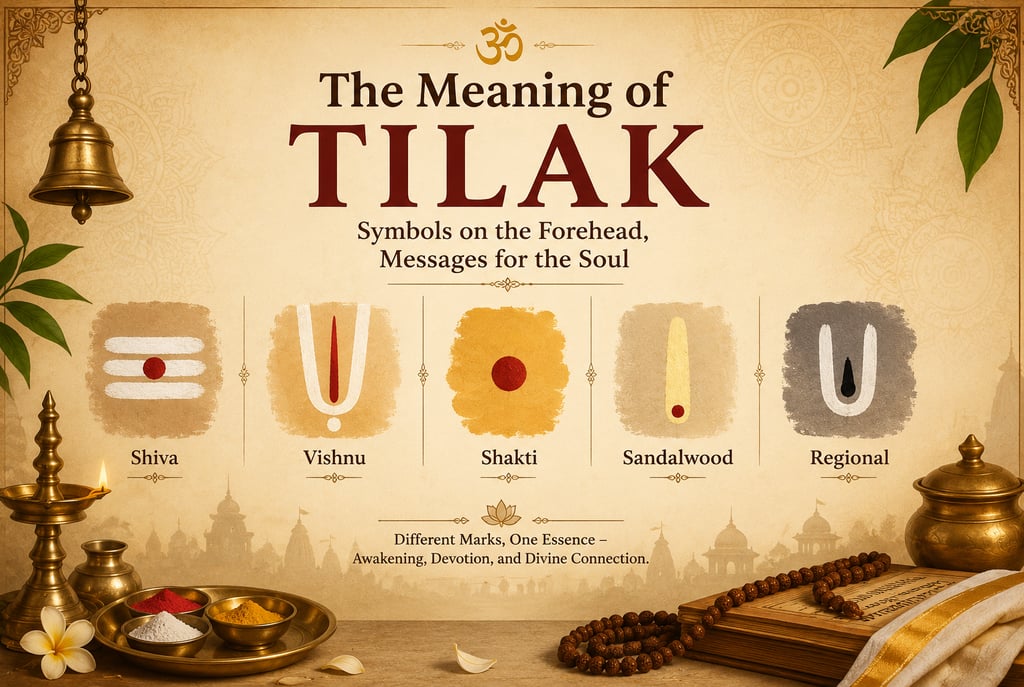
The famous Tripundra (திரிபுண்ட்ரம் / Thiripundram) — three horizontal ash lines — is commonly associated with Shaivites. In Tamil homes, people often simply call it “Thiruneeru” (திருநீறு) or “Vibuthi Pattai” (விபூதி பட்டை). It symbolizes destruction of ego, desires, and ignorance. Also, let’s be honest, it gives serious “mountain sage who eats once a day and judges modern society silently” vibes.
The Urdhva Pundra, (ஊர்த்வ புண்ட்ரம்) — the vertical namam worn by many Vaishnavites — is commonly called “Naamam” (நாமம்) in Tamil, represents devotion to Vishnu. In South India, especially among Iyengars, even the namam has “subtypes.” One version says, “We follow this acharya.” Another says, “Different philosophy, same Vishnu, less family WhatsApp fighting please.”
Then comes the bright red kumkum tilak, known simply as “Kungumam” (குங்குமம்) in Tamil households. Commonly worn by married women and during rituals. Traditionally, it represents auspiciousness and energy. Modern interpretation? It’s also the original “Do Not Disturb” sign during prayer time.
In many North Indian traditions, sandalwood paste tilaks are used during festivals or ceremonies. In Tamil, this is often called “Sandhanam” (சந்தனம்) or “Chandana Kappu.” Cooling, fragrant, and calming — basically Ayurveda’s version of portable air-conditioning for the forehead.
Some communities also use Turmeric Tilak (மஞ்சள் பொட்டு / Manjal Pottu), especially during auspicious ceremonies and village traditions. Because apparently Indian ancestors believed skincare and spirituality should arrive together in one package.
Warriors once wore tilaks before battle. Priests wore them during rituals. Scholars wore them while teaching scriptures. Farmers wore them before harvest prayers. Today, people wear them before exams, interviews, cricket matches, and occasionally while opening laptop spreadsheets they absolutely don’t want to see.
But why the forehead specifically?
Ancient traditions considered the space between the eyebrows the ajna chakra — associated with focus and awareness. Applying sandalwood, turmeric, ash, or kumkum there may have had calming and cooling effects too. In a tropical climate without AC, our ancestors looked at forehead paste and said: “Functional. Spiritual. Economical. Approved.”
Even the materials carried symbolism.
Vibhuti (sacred ash) → everything eventually turns to ash, so don’t let ego become a full-time job.
Sandal paste → calm the mind.
Turmeric → purity and protection.
Kumkum → energy and auspiciousness.
Honestly, Hindu traditions had a habit of hiding practical psychology inside ritual packaging. People remembered symbols better than lectures.
Modern interpretation of tilak is fascinating. Some wear it daily with devotion. Some wear it only during festivals. Some see it as cultural pride. Some see it as mindfulness — a small pause before beginning the day.
And some children wear it because grandmother appears from nowhere after puja and aggressively says: “Come here. One small tilak only.” Resistance is absolutely futile.
In the end, tilak was never merely about religion. It was identity, memory, discipline, symbolism, and belonging. A tiny mark carrying thousands of years of philosophy.
Also proof that Indians invented “branding” long before corporations did.