
Why Do We Light a Lamp in Puja?
Why do Hindus light lamps during puja? Discover the spiritual meaning, scientific logic, cultural symbolism, and modern relevance behind this beautiful tradition — explained with humor and authenticity.
DAILY RITUALS
Shalini Iyer
4/16/20262 min read
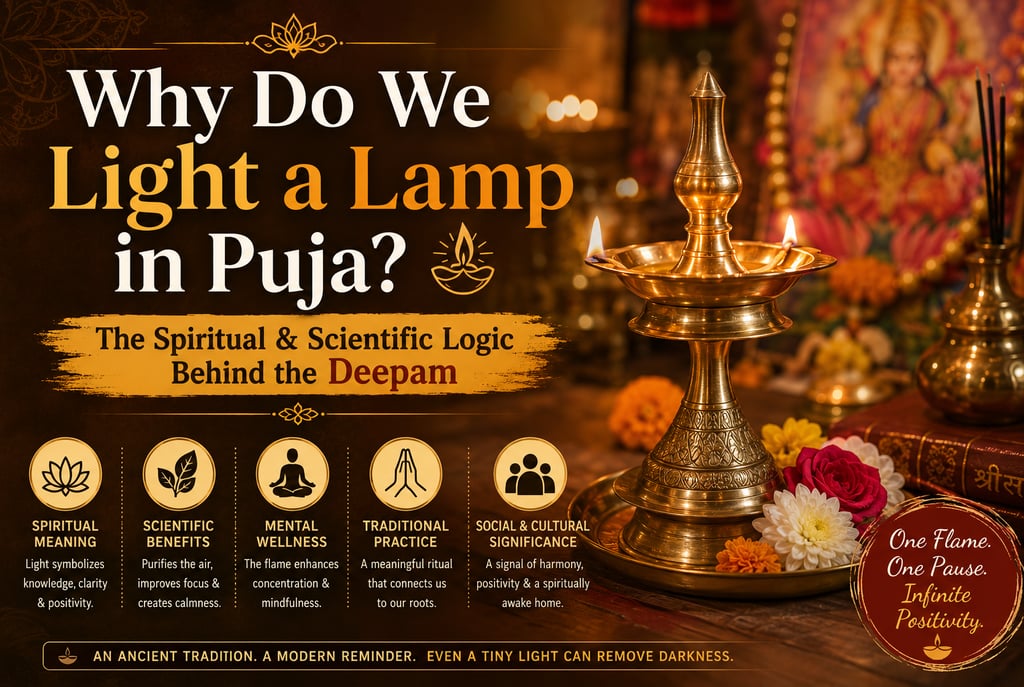
Every Indian house has that one lamp - The VIP of the pooja room.
The item that gets more respect than the TV remote. Before any pooja starts, somebody will inevitably yell:
“Did anyone light the lamp?!”.
Because apparently, without the lamp, even the gods are like: “Hmm… meeting postponed.”
But why exactly do we light a lamp during puja?
Turns out, our ancestors were not just being dramatic with aesthetics and brass décor. There was actual logic behind it. In Hindu tradition, the lamp — or deepam — represents knowledge, clarity, positivity, and consciousness. Basically, the exact opposite of what happens during Monday morning office meetings.
Darkness traditionally symbolizes ignorance and confusion. Light symbolizes awareness and wisdom.
So when we light a lamp, we’re symbolically saying:
“Dear universe, please remove confusion from my brain before I make terrible life decisions.”
Honestly? Still relevant. And notice something interesting.
Most traditional lamps use ghee or sesame oil. Not random choices. Sesame oil has antibacterial properties and was commonly used in old homes to purify the atmosphere. Ghee lamps were believed to create a calming environment and improve focus during prayer or meditation. In old villages, before electricity existed, the evening lamp also acted like a daily reset button.
Sunset happened... Work stopped... Lamp got lit... Family gathered.
It silently announced: “Okay everyone, stop fighting over mango pickles and calm down for five minutes.”
That little flame became a psychological transition from chaos to peace.
Modern version?
Switching from work emails to Netflix. There’s also science hidden in the placement. Traditional lamps are often lit facing east or north. The gentle flame naturally attracts attention and steadies the eyes. Watching a flame for a few seconds actually helps concentration. That’s why many meditation techniques across cultures use candle gazing. Our ancestors basically invented low-budget mindfulness therapy.
No subscription required. Even the famous gesture of covering the flame with your hand and touching your eyes has meaning. Symbolically: “May this light enter my thoughts.” Practically, it creates a tiny moment of warmth, focus, pause, and awareness.
A small ritual.
A surprisingly huge emotional effect.
And then there’s the social side. In Indian homes, lighting the evening lamp became a signal that the house was active, awake, and spiritually alive.
Imagine ancient apartment gossip:
“Oh no… Ramesh’s house lamp wasn’t lit today.”
“Something’s wrong.”
“Or maybe they finally got tired after hosting relatives for three days.”
The lamp quietly created community rhythm. Without WhatsApp groups. Without notifications. Without somebody sending “Good Evening” images.
At the end of the day, the lamp in puja is not just about religion. It’s about creating one small moment of stillness in a noisy world.
One flame.
One pause.
One reminder that even a tiny light can remove darkness.
Also… let’s be honest. It makes the pooja room look absolutely cinematic.