
Why Do We Pray? The Spiritual, Scientific & Surprisingly Funny Logic Behind Prayer
Prayer is more than ringing bells and asking God for exam marks five minutes before results. In this humorous and insightful blog, explore the real purpose behind prayer in Hindu traditions — from mental peace and mindfulness to discipline, gratitude, and emotional balance. Decode the spiritual and scientific logic behind daily prayers, mantras, temple rituals, and why this ancient practice still matters in the modern world.
DAILY RITUALSSCIENCE BEHIND TRADITIONS
Shalini Iyer
4/24/20262 min read
Why Do We Pray?
Or, “Dear God… please fix the Wi-Fi of my life.”
Prayer is one of humanity’s oldest habits. Before smartphones, therapy apps, productivity podcasts, and “morning routine influencers,” people had prayer. And somehow, it survived every generation—even the one that says “bro” every three seconds. Because deep down, humans always need someone to talk to when life becomes a full-season emotional drama.
But prayer in Hindu traditions was never meant to be just “asking God for marks, money, and marriage alliance approvals.” It was actually designed like an ancient mental operating system.
Yes. Your grandparents were basically running spiritual software updates before sunrise.
In most Indian homes, prayer starts with one magical sentence:
“Did you light the lamp?”
Not “Did you complete your goals?”
Not “Did you drink protein shake?”
No. Lamp first. Civilization later.
And honestly, there’s hidden brilliance behind this. Prayer creates pause.
That’s it. That’s the secret.
Modern life trains the brain to constantly react: notifications, deadlines, reels, traffic, relatives asking “What next in life?” Prayer forces a small interruption in the chaos. For five minutes, you stop scrolling and start observing yourself. Ancient people may not have known the term “mental health reset,” but they absolutely knew the experience.
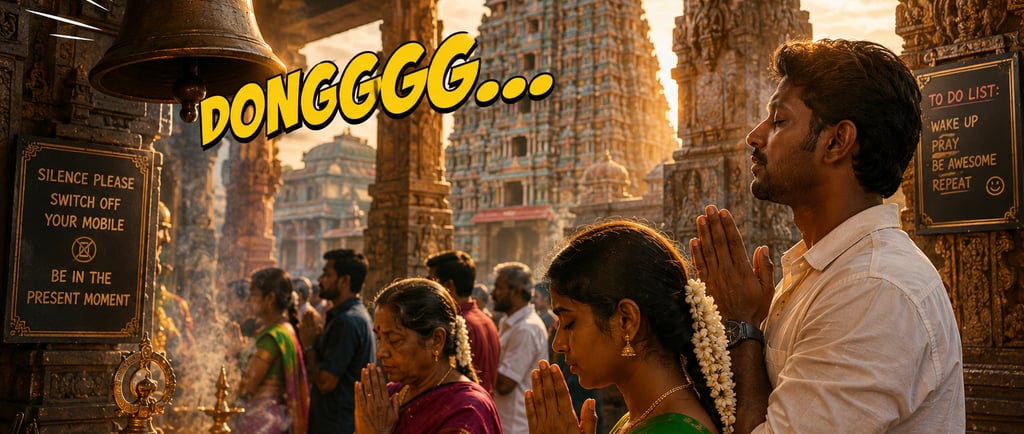
Take temple bells, for example. You enter a temple half-asleep, thinking about assignments, bills, or whether the dosa batter at home survived fermentation. Then suddenly—DONGGGGGG.
Brain reboot. The bell wasn’t just for dramatic effect. The sound pulls attention into the present moment. Modern mindfulness apps charge subscription fees to teach what temples were already doing for free.
Even chanting has logic behind it. Repeating mantras rhythmically regulates breathing and slows mental noise. Today, neuroscientists talk about breathwork and vibration calming the nervous system.
Our ancestors just said: “Chant properly. Don’t eat the words like fast-forward YouTube playback.” And let’s be honest. Many prayers are hilariously human.
One student prays: “Please help me pass.” After studying for exactly 11 minutes.
One uncle prays for peace, then fights three people in the parking lot outside the temple.
One auntie asks for detachment from worldly desires while booking gold jewelry for a wedding.
God must have incredible patience. But prayer was never about becoming instantly perfect. It was about becoming aware. When people prayed daily, they were subtly training:
discipline
gratitude
emotional control
humility
consistency
Basically, prayer was ancient self-development… but without LinkedIn posts saying: “Woke up at 4 AM. Hustle. Dominate. Conquer.” The modern interpretation of prayer is beautiful when understood correctly. You don’t have to see it only as ritual.
Prayer can mean:
sitting quietly before a busy day
expressing gratitude
reflecting on actions
calming anxiety
reconnecting with values
reminding yourself you’re part of something larger than your ego and browser history
That’s why prayer survives every generation. Because humans may evolve from palm-leaf manuscripts to AI and smartwatches…
…but the need for inner peace remains exactly the same.
And somewhere between the incense smoke, ringing bells, folded hands, and whispered mantras…
people still find comfort.
Even if they came to pray mainly because exam results are tomorrow.